a.
Origin
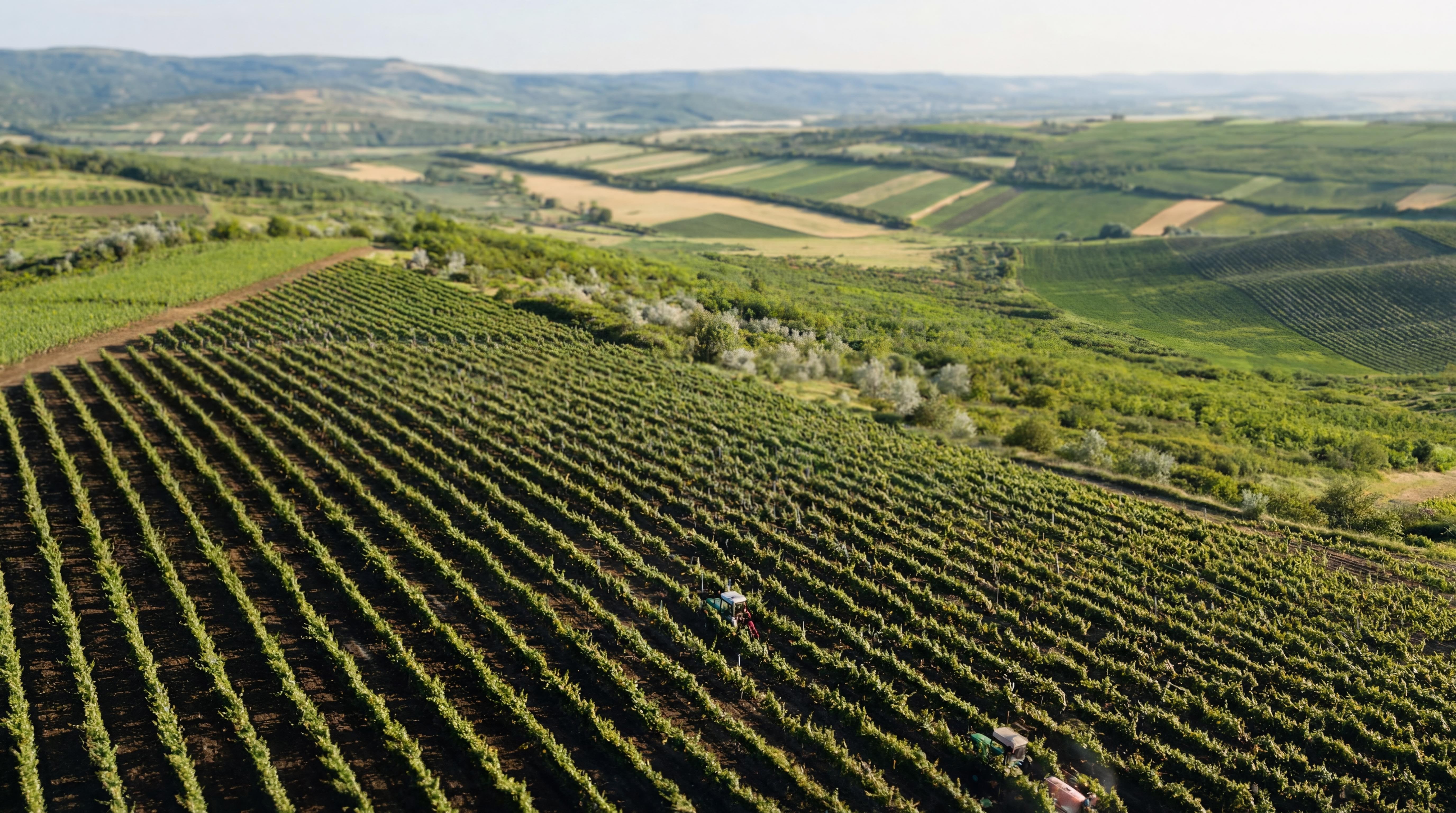
A single estate inside the Codru IGP. One family, one address, one set of vineyards.

Moldova has the highest vineyard density per capita in the world: roughly 4 hectares of vine for every 100 people. Yet most professional buyers in the EU cannot name a single Moldovan wine producer they have imported from directly. The gap has a simple cause: Moldovan wines reach Europe through long distribution chains. The producer’s story disappears somewhere between exporter, importer, and distributor. We built this site to close that gap.
Distributors, sommeliers, and private-label clients hit the same wall when evaluating a small producer from an unfamiliar region: not enough information.
Most small wineries offer a website with an “About Us” page and a contact form. Everything else requires emails, trade fairs, and personal referrals. Aproape reverses that equation. The site contains parcel data, soil composition, altitude, grape varieties grown, and the winemaking process with photographs.
We are a Moldova winery with small-batch production and named accountability (the Rosca family). Traceability covers every step from vine to bottle. Only 17% of wine companies can respond to supply chain disruptions within 24 hours. We provide documentation in real time.
Professional buyers need verifiable data, not marketing stories. When a sommelier lists an unknown wine, their reputation stands behind that choice. When an importer adds a new origin to their portfolio, they need documentation that convinces the downstream chain.
At Aproape, every lot is documented with the parcel of origin, harvest date, grape variety, winemaking method, and storage conditions. Consumers are 5% more likely to choose a bottle that comes with a winemaker’s story — and willing to pay 6% more for it. For a sommelier, those numbers mean a tableside selling argument that holds up on its own.
Recorded by block and aspect across the Codru slopes, 150–400 m.
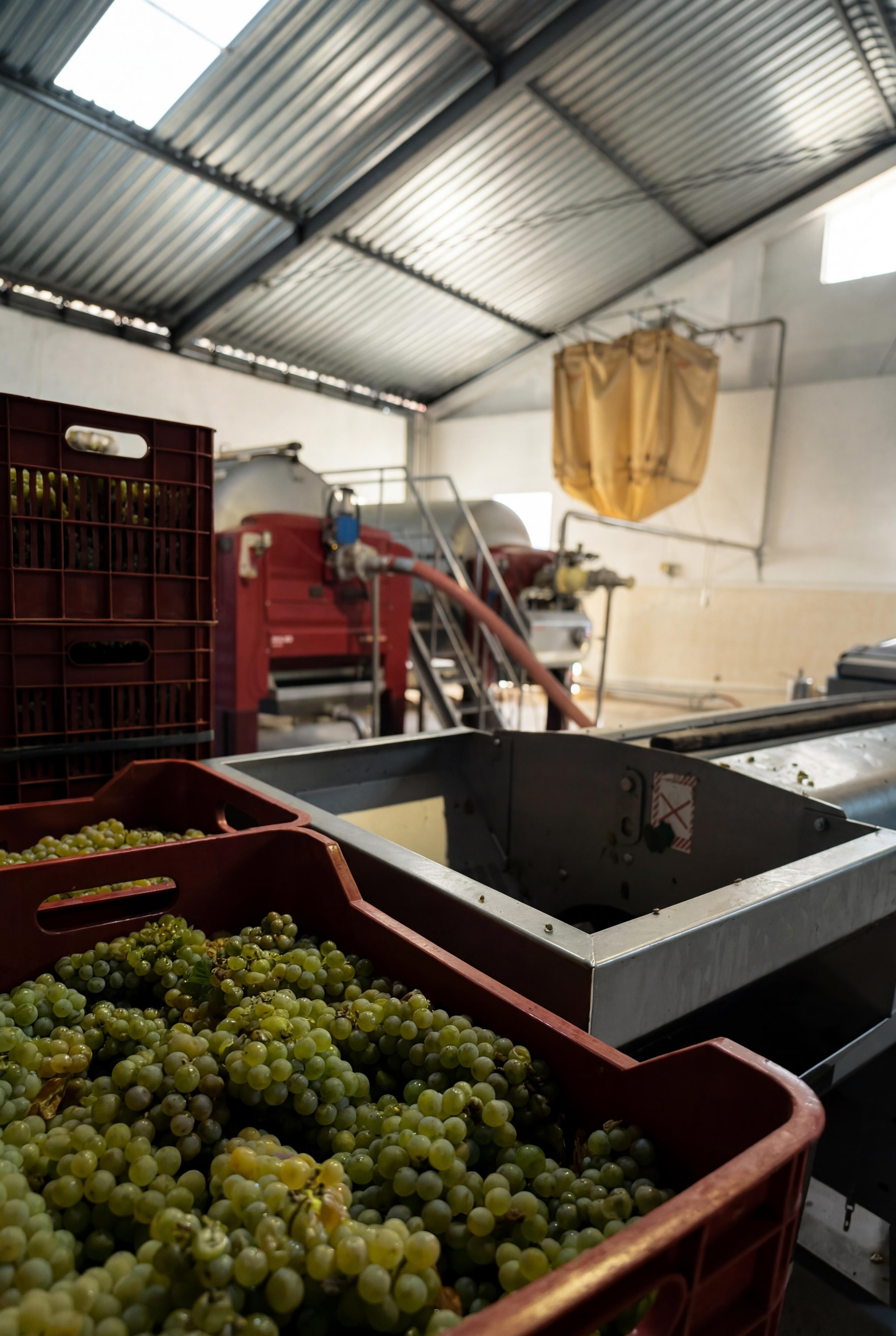
Picking date logged per lot and hand-checked at the press.
French technique, temperature-controlled at every decisive stage.
Estate cellar, built 2020 — tank- and barrel-tracked through to bottling.
A professional buyer should not need weeks to verify a supplier.
The Roșca family · on why this dossier exists
Vineyards in the Codru region stretch between 150 and 400 metres altitude. Chernozem soil covers approximately 62% of the territory. The profile is specific: mineral-rich black soil, cool climate, moderate rainfall. White wines from Codru have natural acidity and complex aroma. Tasters compare the profile to Burgundy.
Moldova holds 4 Protected Geographical Indications (PGIs) recognised by the EU: Codru, Ștefan Vodă, Valul lui Traian, and Divin. PGI Codru certification is a verifiable guarantee of origin, backed by European legislation. Moldova also hosted the 46th World Congress of Vine and Wine (OIV). The country is no longer just a volume exporter; it is a producer the international community takes seriously.
Moldovan bottled wine exports grew 9% in value in 2024, even as volumes fell. Buyers are asking for less, but better. The market is moving toward premiumisation, not scale.
Aproape works at small scale, deliberately. Limited production means real control over the quality of every lot. Wines under 7 EUR have become “a pure scale game dominated by mega-brands.” The premium segment of small producers does not play that game — we compete on precision and on direct relationships with each buyer.
You deal directly with the family that grows, makes and bottles the wine.
Traditional distribution chains involve 4–5 intermediaries between producer and end consumer. Each level takes a cut from the margin, and the producer loses control over pricing. Dependency on importers cuts out entire market segments made up of small orders, niche customers, and passionate restaurateurs.
Aproape does not sell online. We have no shop and we do not display prices. This site exists to start a direct relationship between producer and professional buyer. We discuss volumes, varieties, delivery terms, and potential private-label projects. The conversation is between you and the people who make the wine.
Aproape operates under the Deep and Comprehensive Free Trade Agreement (DCFTA) between Moldova and the EU, in force since July 2016. A September 2025 update eliminated the last remaining customs duties on agricultural products. Result: zero customs duties for Moldovan wines on the EU market.
PGI Codru certification, labelling to European standards, and established export routes are already operational. Compliance is documented, not promised. Excise codes, labelling compliance, import documents — the administrative cost per bottle is managed by us.
Moldova exported 144 million litres of wine in 2024, worth USD 234.7 million, to 73 countries. That is a 17% increase in volume and 22% in value compared to 2023. Today, 62% of Moldova’s wine exports reach EU markets.
Individual market numbers confirm the trend. Moldovan bottled wine exports to Germany grew 112% in value in the first half of 2024. Shipments to Romania grew 9%, to the Czech Republic 5%, to Poland 4%.
Aproape produces in this context. As a Codru winery with PGI certification, we offer exactly what European importers are looking for: verifiable origin, a named producer, lot-by-lot documentation.
If your question isn’t here, the family will answer it directly — usually within two business days.
Ask the familyWrite to us with your needs: volumes, varieties, target market. We respond with concrete data: technical sheets, current availability, commercial terms.